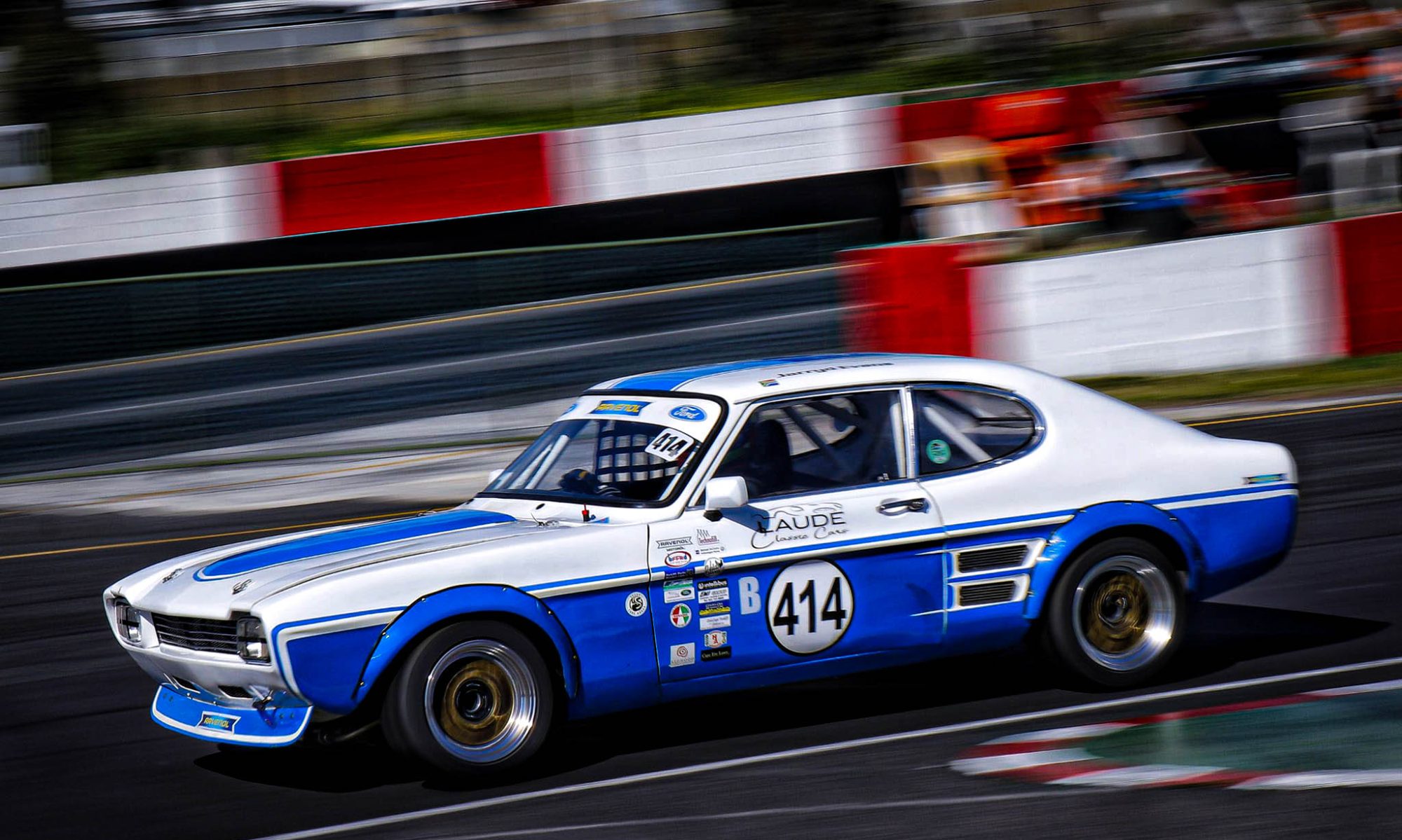

Pre-80 Historic Saloon Cars
These Historic Cars shall be defined as exhibition type cars raced, registered, and produced before 1 January 1980. These cars and any derivative thereof must be out of production for at least 20 years after this cut-off date pre-1980. Please refer to the MSA published version of the regulations for the full list of requirements.
2026 MSA Historic Regulations
Technical Guide for Pre-1980 Saloon Cars
The Golden Era of Saloons
To compete in the 2026 Historic Saloon Car Championship, your vehicle isn't just a car; it's a time capsule. Eligibility is strictly controlled to preserve the spirit of the era. The fundamental rule is the production date cutoff.
- 🏎️ Production marketed before 31 Dec 1979
- 📅 Out of production for 20+ years
- 📄 Valid MSA Historic Technical Passport (HTP)
Engine & Electronics
Originality is paramount. Engines must match the manufacturer's original configuration (Inline, V, Flat, Rotary). While internal components like camshafts are free, modern electronic aids are strictly capped or banned to ensure driver skill remains the deciding factor.
💡 ECU Restrictions
Aftermarket ECUs are allowed ONLY if they retail under R4999.00. Allowed brands include Powermods, Dicktator, Spitstronic, and Gotech PRO V7. No traction control permitted.
Wheels & Tyres
Grip is limited to period-appropriate technology. Slicks are permitted. Only specific semi-slick compounds and standard production tyres are permitted. Rims must generally stay within 1 inch of original specs, with exceptions for V8s.
Bodywork Constraints
Modifications to the silhouette are heavily restricted. The exterior must remain "exactly as produced" in plan and profile. However, to accommodate wider period rubber, limited flaring is permitted.
- Panels Fibreglass allowed if approved & identical profile. No Carbon Fibre.
- Glass Polycarbonate (Lexan) allowed. Front screen min 5mm thick.
Prohibited
Strictly banned items to maintain historic integrity and prevent "chequebook racing."
- ❌ ABS Braking Systems
- ❌ Traction Control
- ❌ Sequential Gearboxes
- ❌ Remote Reservoir Shocks
- ❌ Carbon Brake Rotors
- ❌ LED Light Strips
Transmission & Weight
Cars must meet minimum weight standards based on their classification. Transmissions are limited to 5-speeds (manual), with special dispensations for high-power V8s using specific American gearboxes.
⚖️ Minimum Weight Rules
⚙️ Gearbox Rules
- ▪ Max 5 Forward Speeds
- ▪ Must be original type or production derived
- ▪ V8 Exception: Jerico, Richmond T10, G-Force allowed.
Mandatory Safety Equipment
Safety is non-negotiable. Regardless of historic status, all vehicles must meet modern MSA GCR 239 standards.
Pre-90 Historic Saloon Cars
These Historic Cars shall be defined as production type cars raced, registered and produced post 1 January 1980 but prior to 31 December 1989. These cars and any derivative thereof must be out of production for at least 20 years after this cut-off date pre-1990. Please refer to the MSA published version of the regulations for the full list of requirements.
PRE-1990 HISTORIC TOURING CARS
2026 MSA Technical Regulations
A visual guide to building a compliant legend. Relive the glory days of 1980-1989 production car racing.
⚑ Eligibility: The Golden Era
To enter the championship, your vehicle must be a production car (2 or 4 door) launched within the definitive 80s window. Proof of heritage via an MSA Historic Technical Passport (HTP) is mandatory.
Modification Allowances
This chart visualizes where the regulations allow engineering freedom versus where strict period-correctness is enforced. While engine internals are open, the chassis and body silhouette must remain standard.
Takeaway: Focus your development on Engine Internals and Brakes. Respect the Chassis.
Weight Optimization
You are permitted to strip interiors (carpets, seats, sound deadening) to save weight, but the car cannot be lighter than 10% below the manufacturer's original kerb weight.
Lexan Windows
Lightening Chassis
Under The Hood
The heart of the car must remain true to its production roots, but tuning is encouraged.
Block & Head
Must be original standard production or period-correct OEM replacement.
Internals
Crankshaft and Camshafts are FREE. Metal removal permitted.
Forced Induction
Max 1 Turbocharger. Boost limited to 100 kPa (1 Bar).
Bodywork & Aero
Preserving the silhouette while allowing for wider rubber.
The regulations strictly protect the car's original silhouette. However, to accommodate racing tyres, you may flare the wheel arches.
- ✔ Period correct front spoilers allowed.
- ✔ Seam welding chassis permitted.
- ✘ No carbon fiber body panels.
- ✘ Lightening chassis prohibited.
Noise Restrictions
Strict noise limits apply to both stationary and drive-by recording.
Handling & Stopping
Balancing modern safety with historic configuration.
Suspension
Brakes
*Unless standard OEM fitment.
Mandatory Safety Checklist
Pre-2000 Historic Touring Cars
In October 2024, the FIA World Motor Sport Council (WMSC) announced an extension of the historic cut-off period to include cars from 1991 to 2000. This now affords the FIA to bring back the once formidable FIA Super Touring Cars (together with Group B Rally cars, and Formula 1 cars of that era). Historic Touring Cars will commence in South Africa from the 2026 season with Historic Racing South Africa (HRSA) as the initial custodians of the category. NOTE: The integration and eligibility of the category, Historic Touring Cars (Pre-2000), is at the sole discretion of the relevant historic club and or region.
THE SUPER TOURING ERA
1990 – 2000
The Golden Decade of Saloon Cars
The Super Touring (Class II) regulations were born in 1990 from a need to control the runaway costs of the previous Group A formula. The goal was to create a direct, recognizable link between the family saloons in the showroom and the aggressive, high-revving machines on the track. This philosophy led to a "golden age" of motorsport, defined by massive manufacturer support and intensely close racing across the globe.
The Core Formula: Key Rules
The regulations were highly specific to ensure close competition using production-based cars. Key rules included a 2.0L naturally-aspirated engine cap, two-wheel drive, and a 4-door body.
A slight weight penalty was applied to rear-wheel drive (RWD) cars to balance performance against their front-wheel drive (FWD) rivals.
Curbing "Homologation Specials"
Initially, manufacturers only had to produce 2,500 road cars to homologate their racing parts. This led to "specials" like the Alfa Romeo 155 Silverstone, which was a limited-run road car built specifically to gain an aerodynamic advantage. In 1995, the FIA increased the requirement tenfold to 25,000 units, forcing teams to use true mass-production models.
The Manufacturer Golden Age
The accessible rules attracted a huge number of manufacturers, resulting in diverse grids and intense competition. The British Touring Car Championship (BTCC) from 1991-2000 saw seven different manufacturers win titles, with none dominating for long.
The Collapse: A Cost Spiral
Ironically, the era's success was its undoing. With regulations so tight, manufacturers began spending "Formula 1 level" money to find tiny advantages in engine management and suspension. Costs spiraled, forcing manufacturers to withdraw and leading to the formula's collapse after 2000.
Illustrative Budget Growth
While exact figures are private, the trend of team spending grew exponentially through the decade, making the series unsustainable.
The Legacy
The Super Touring era ended due to high costs, but its lessons and 2.0L concept directly inspired the next, more affordable generation of touring car rules, Super 2000. It remains one of the most beloved and competitive periods in motorsport history.